Capital and coordination — not new ideas — are what's standing between us and a real map of the brain and all that it would unlock.
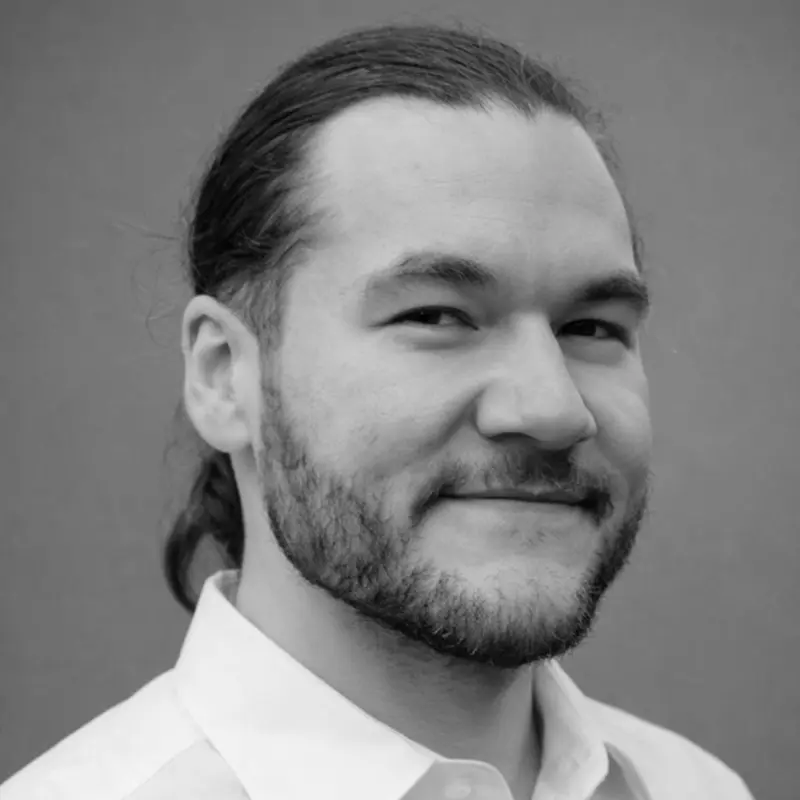
New episode with Dr. Adam Marblestone, CEO and co-founder of Convergent Research. Adam is an extraordinary catalyst and accelerant for science: he has influenced or routed billions in funding, he helped start significant companies and scientific subfields, and he is the world's go-to person for neuroscience roadmapping. This year, the NSF launched a $1.5B X-Labs initiative inspired by the FRO model Adam pioneered. Though he started with neuroscience, today he helps organize scientific endeavors across many fields, including AI, math, biology, climate, astrophysics, and more.
Adam proposes that fields like neurotech, whole-brain emulation, cryo, and nanotech are severely limited by capital and coordination — not ideas. Connectomics is a clear case. He argues that mapping the brain's full wiring diagram is the approach most poised-to-scale and still extremely neglected. Costs for a molecularly annotated mouse connectome have come down orders of magnitude, from an estimated $10B to $100M–200M, Adam suggests, with a human connectome perhaps costing around $1B–2B. The cost curve of connectomes is similar to transistors and gene sequencing: once it is low enough, we get extraordinary outcomes for humanity. Near-term applications could pay for it: new drug targets for brain disease, insights for AI development, emulations, and even "control knobs" for mood and focus we haven't identified yet.
In this episode, we go deep on many topics in neurotech and beyond: what the brain can do that computers still can't; what neuroscience could teach AI; how you'd actually map a whole mammal brain; how far today's fly-brain simulations really get toward an upload; what it would take to move mind uploading beyond the fringe of science; where brain-computer interfaces go next; nanotech, reversible cryonics, AI doing its own ML research, and even predictive, agent-based economics. Hope you enjoy!
Listen & watch: YouTube · Spotify · Apple Podcasts
Chapters
- 00:00 — Introduction
- 01:40 — What are the grand challenges of neurotech?
- 04:50 — What the brain does that computers still can't (on a few bananas a day)
- 14:43 — The neuroscience overhang: why brains learn from so little data
- 26:29 — How to record and map the brain: DNA "ticker tape," ultrasound, and the unexplored map
- 40:29 — Why connectomics is the area most poised to scale
- 47:54 — How whole-brain connectomics works, end to end
- 55:27 — Simulating the fly brain: how far does it actually get us?
- 57:51 — What would it cost to map a mammal's brain?
- 59:55 — What will be connectomics' ChatGPT moment?
- 1:04:35 — What a connectome unlocks: disease, drug targets, and the brain's control knobs
- 1:14:20 — Scaling up to the human brain — a faster timeline than expected
- 1:17:34 — Mapping activity, and what the fly connectome has revealed
- 1:27:55 — What you could build with today's connectome
- 1:35:29 — Why uploading may be one of civilization's great cornerstones and transitions
- 1:42:43 — Optimistic visions of a future with uploading
- 1:49:12 — Beyond neurotech: virtual cells, nanotech, and AI-driven science
- 2:15:29 — BCIs today: semi-invasive devices, ultrasound, and what's on the horizon
- 2:22:44 — Why science is capital- and coordination-limited, not idea-limited
Links & references
Guest & organizations
Research papers & technical references
- Physical principles for scalable neural recording, Marblestone et al. (2013)
- Conneconomics: the economics of dense, large-scale, high-resolution neural connectomics, Marblestone et al. (2013)
Referenced external papers & projects
- Neural dust: an ultrasonic, low power solution for chronic brain-machine interfaces, Seo et al. (2013)
- A drosophila computational brain model reveals sensorimotor processing, Shiu et al. (2024)
- ConnectomeBench: can LLMs proofread the connectome?, Brown et al. (2025)
- E11 Bio — PRISM technology for self-correcting neuron tracing (2025)
- ZAPBench — Zebrafish activity prediction benchmark (Google Research)
- Connectome-seq: high-throughput mapping of neuronal connectivity at single-synapse resolution via barcode sequencing (2026)
- Wellcome: Scaling up connectomics
- MICrONS Explorer: A virtual observatory of the cortex
- Decoupled Neural Interfaces using Synthetic Gradients, Jaderberg et al. (2016)
- Neuronal wiring diagram of an adult brain, FlyWire (2024)
- Atomically precise mechanosynthesis of carbon structures on hydrogenated Si(100) by inverted-mode STM, CBN Nano (2026)
- Ultrasound imaging of the brain, Aleph Neuro (2026)
- Openwater (Mary Lou Jepsen)
- Janelia Research Campus
- Janelia's Danionella bet (2026)
- NSF X-Labs
- Edison Scientific (FutureHouse spinout; "Kosmos")
- Isomorphic Labs (Max Jaderberg)
- AI 2027 (Daniel Kokotajlo et al.)
- AI 2040: Plan A (Daniel Kokotajlo et al.)
Books & media
- A Brief History of Intelligence — Max Bennett
- The Age of Em — Robin Hanson
- We Are Legion (We Are Bob) — Dennis E. Taylor
- The City and the Stars — Arthur C. Clarke
- Permutation City — Greg Egan
- Making Sense of Chaos — J. Doyne Farmer
- Pantheon (AMC)